Foundation Crack Repair in Arlington, TX
Polyurethane and epoxy injection for active and dormant foundation cracks — structural reinforcement for North Texas homes.
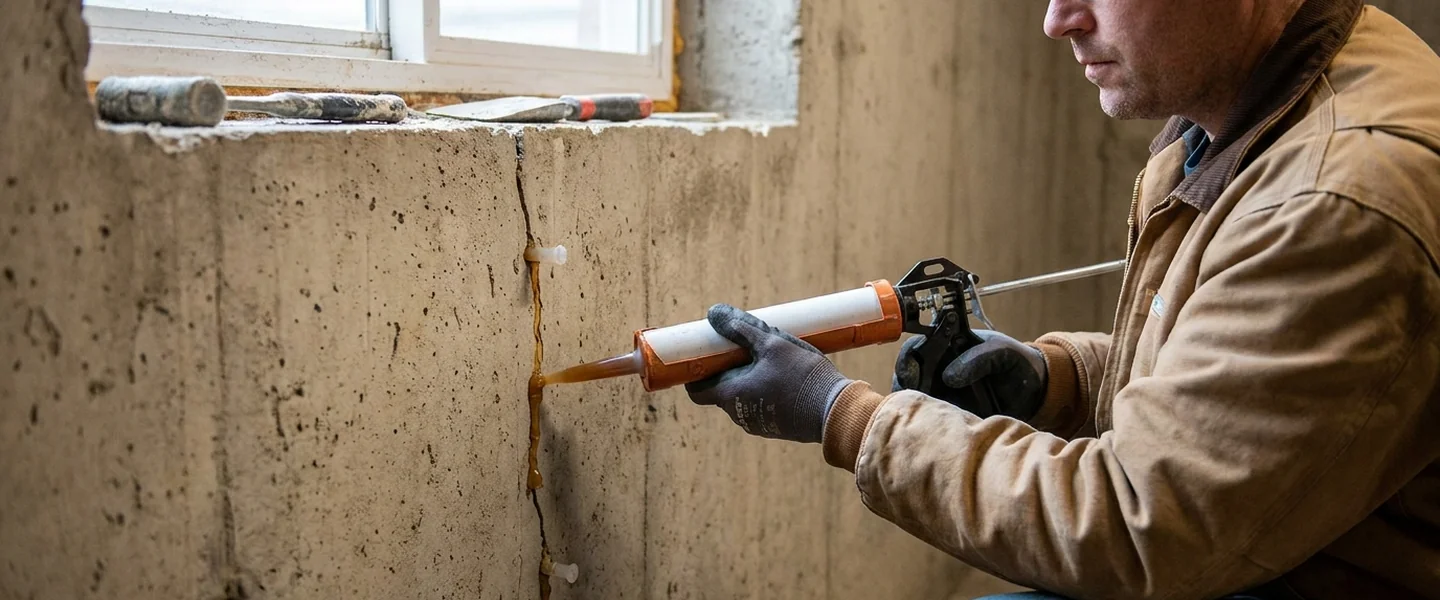
Call Now: (817) 904-3805Foundation crack repair in Arlington, TX requires understanding what type of crack you're looking at, what caused it, and whether it's actively moving or dormant. Arlington TX Foundation Pros uses polyurethane foam injection for active cracks (those still moving or admitting water) and structural epoxy injection for dormant cracks requiring bonding strength. Both methods are completed without excavation in most cases — one-day jobs that seal the crack from the inside and restore structural integrity. Call (817) 904-3805 for a free inspection and written estimate.
Foundation Crack Repair in North Texas Clay Soil
The Blackland Prairie clay that underlies most of Arlington and Tarrant County expands when wet and contracts when dry — sometimes by several inches at the surface layer. This constant soil movement produces the foundation cracks North Texas homeowners see most often: diagonal cracks radiating from window and door corners, vertical cracks in poured concrete foundation walls, stair-step cracks in brick veneer, and horizontal cracks in basement or crawlspace walls. Each crack type tells a different story about the underlying cause, and the repair method must match the diagnosis — not just the visible symptom.
Hairline cracks (under 1/8 inch) in new construction are often cosmetic — concrete shrinks slightly as it cures, and small cracks are normal in the first two to five years. Cracks wider than 1/4 inch, cracks that are diagonal and propagating, horizontal cracks in walls with any lateral displacement, or any crack that is actively growing between inspections are structural concerns that warrant immediate evaluation. In Arlington's climate, cracks that open and close seasonally — wider in summer drought, narrower after winter rains — indicate ongoing soil movement that crack repair alone will not resolve unless the drainage driving the movement is also addressed.
Project Details
| Service | Foundation Crack Repair (polyurethane + epoxy injection) |
|---|---|
| Timeline | One day for most residential crack repair jobs |
| Methods | Polyurethane foam (active/wet cracks), structural epoxy (dormant/dry cracks) |
| Excavation Required | None in most cases — injection from interior |
| Warranty | 25-year workmanship warranty; fully transferable to subsequent owners |
| Permit Required | Not typically required for crack injection; we verify per jurisdiction |
| Pricing | Quoted per job after free on-site inspection — every quote is itemized in writing |
Our Foundation Crack Repair Process
- 1Free on-site inspection. We examine the crack type, width, orientation, and any signs of active movement. We check door and window operation, floor levelness, and exterior conditions that may be driving the cracking.
- 2Written diagnosis and quote. We identify whether the crack is cosmetic, structural, or actively moving and recommend the appropriate repair method. The written quote is itemized — you see the labor, materials, and warranty terms before anything starts.
- 3Crack preparation. We clean and prepare the crack surface, install injection ports at regular intervals along the crack length, and seal the face with surface paste to direct the injected material into the crack.
- 4Material injection. For active or water-admitting cracks, we inject expanding polyurethane foam that fills the crack from port to port and bonds to the concrete. For dormant structural cracks, we inject two-part structural epoxy that cures to greater compressive strength than the surrounding concrete.
- 5Cure and inspection. We allow appropriate cure time, remove injection ports, grind the surface flush, and inspect the full repair before leaving.
- 6Drainage recommendations. If the crack was driven by moisture cycling or soil movement, we provide written drainage correction recommendations. Crack repair without addressing the moisture source is a temporary fix in North Texas clay soil.
Materials We Use
| Application | Product |
|---|---|
| Active crack injection | Sika Injection-306 polyurethane foam (expanding, flexible) |
| Structural crack injection | Sika Injection-451 two-part epoxy (compressive strength > concrete) |
| Surface seal | Sikadur-52 paste (temporary port seal and face cap) |
| Carbon fiber reinforcement | StrongHold carbon fiber straps where structural reinforcement is warranted alongside crack repair |
Common Crack Scenarios in Arlington, TX Homes
Diagonal Corner Cracks
The most common crack in Arlington's 1960s–80s homes — diagonal cracks at window and door corners caused by differential settlement in Blackland Prairie clay. Often active and propagating without repair.
Stair-Step Brick Cracks
Brick veneer stair-stepping through mortar joints follows the mortar, which is weaker than the brick. Common when the foundation below is settling unevenly — requires foundation evaluation alongside the masonry repair.
Horizontal Basement Wall Cracks
Horizontal cracks with any inward displacement are a structural emergency — they indicate lateral soil pressure exceeding the wall's capacity. These require immediate evaluation and typically bowing wall stabilization alongside crack repair.
Shrinkage Cracks (New Homes)
Hairline vertical cracks in poured concrete that appear in the first 2–5 years of a home's life are often curing shrinkage. We distinguish these from structural cracks at inspection and recommend sealing only if water infiltration is occurring.
Why Arlington, TX Homes Have More Foundation Cracks Than Most
The Blackland Prairie formation that runs through Tarrant County, Collin County, and much of the Dallas-Fort Worth metroplex is composed of expansive black clay (locally called "black gumbo") with a shrink-swell coefficient among the highest in North America. The USDA NRCS soil surveys for Tarrant County show large portions of the county in the Houston-Burleson-Heiden soil series — all high-plasticity clays that exhibit significant volume change with moisture variation. Arlington's hot, dry summers — with weeks of 100°F heat and low humidity — drive significant soil drying and contraction. The winter rain pattern then rewets the soil, causing re-expansion. Homes built in the 1960s and 1970s, which make up a substantial portion of Arlington's stock between zip codes 76010 and 76015, were typically placed on shallow concrete slabs with minimal post-tension reinforcement. They were not engineered for fifty years of this soil cycle, and the cracks that result are predictable, common, and fixable.
Warranty in Detail
Our 25-year workmanship warranty on crack injection covers the repair itself — we guarantee the injected material will not separate from the crack walls or allow water infiltration through the repaired area during the warranty period. What the warranty does not cover: new cracks that form in different locations due to continued soil movement, cracks that reopen because the underlying drainage or foundation stability issue was not addressed, or damage caused by events outside our scope (plumbing leaks, flooding, structural alterations). The warranty is fully transferable to subsequent owners — we provide written documentation for real estate closings. When you sell your Arlington home, the warranty transfers with a phone call to our office.
After the Crack Repair
Polyurethane foam cures within hours. Structural epoxy requires 24 hours before the area can bear load. We provide written care instructions: avoid saturating the repaired area during the cure period, monitor the crack location at 30 days and 6 months, and contact us immediately if any movement is visible. If the crack is part of a larger drainage or settlement issue, we schedule a 12-month follow-up inspection as part of the warranty service. Our goal is a crack that stays sealed for the warranty period — we're not done with the job until the follow-up confirms it.
How We Quote Without Quoting on the Phone
We cannot give you an accurate crack repair quote without seeing the crack. The variables — crack width, length, whether it's active or dormant, whether water is entering, whether structural reinforcement is needed alongside injection — are impossible to assess from a description. Any company that gives you a firm price over the phone is either building in a large buffer or planning to revise the number on-site. We do a free in-person inspection, diagnose the crack type and cause, and provide a written itemized quote. You decide whether to proceed. No pressure, no deposit required to get the quote.
Foundation Crack Repair FAQs — Arlington, TX
Is a hairline crack in my foundation serious?
Not necessarily — hairline cracks (under 1/8 inch) in poured concrete are often curing shrinkage. The key question is whether the crack is stable or growing. We measure and photograph cracks at the inspection; if the same crack is wider at a follow-up visit, that's an active structural issue requiring repair.
Can you repair a crack from the inside without digging?
Yes — both polyurethane injection and epoxy injection are done from the interior with no excavation. We drill injection ports through the wall at the crack, inject the material under pressure, and seal from inside. Excavation is only required if we're adding exterior waterproofing as part of the same project.
Will crack repair stop water from coming in?
Polyurethane foam injection creates a flexible, waterproof seal that stops water entry through the repaired crack. However, if water is entering through multiple cracks or through wall porosity rather than a discrete crack, a broader waterproofing solution may be needed. We assess the full water entry picture at the inspection.
How do I know the crack isn't a sign of a bigger structural problem?
We check for signs of differential settlement — uneven floors, racked door frames, gaps at the ceiling — alongside the crack itself. If the crack pattern suggests foundation movement rather than isolated cracking, we recommend a full foundation evaluation including elevation survey. We won't sell you a crack injection if piering or stabilization is what the home actually needs.
What's the difference between polyurethane and epoxy injection?
Polyurethane foam expands to fill the crack, is flexible (accommodates minor future movement), and creates a waterproof seal — best for active, water-admitting, or still-moving cracks. Epoxy cures rigid and bonds both crack faces with compressive strength exceeding the surrounding concrete — best for dormant structural cracks where bonding the crack faces back together is the goal. We choose the right product for the crack condition at inspection.
Does crack repair affect my home's resale value in Arlington?
A repaired and warranted crack with documentation is better than an unrepaired crack at resale. Texas disclosure law requires sellers to disclose known foundation issues. Having a professional repair with a transferable warranty, an inspection report, and documentation of the cause and remedy is the strongest position for an Arlington home sale. We provide a complete documentation package on request.
How much does foundation crack repair cost in Arlington, TX?
Call (817) 904-3805 for a free written estimate. Cost depends on crack length, type, location, and whether structural reinforcement is needed alongside injection. We don't quote on the phone — the inspection takes 30–45 minutes and the written quote is provided the same day.
Do you serve all of Arlington, TX?
Yes — all Arlington zip codes (76001–76018) and surrounding Tarrant County communities including Mansfield, Grand Prairie, Kennedale, Euless, Hurst, Burleson, and Bedford. Call (817) 904-3805.
Related Services
Free Foundation Crack Inspection in Arlington, TX
Written estimate, same-week appointments, 25-year transferable warranty. No high-pressure sales.
Call (817) 904-3805Related reading: What Affects Foundation Repair Cost in Arlington, TX | Hairline vs Structural Cracks: How to Tell the Difference
What You Get in Our Quote vs. the Lowball Bid
We don't compete on the lowest sticker price — we compete on the quote that gets the job actually done. Here is what is included in every quote we write, and the cut-corners that show up in cheaper bids.
Included in our written quote
- Engineer-style elevation + crack assessment
- Soil and drainage evaluation
- Written quote with pier counts + warranty terms
- Photo documentation of every crack/movement
- Permit-pulling where required
- Post-install elevation re-check
Cut corners in the lowball bid
- Free-quote with no actual inspection
- Pier-count guesses without measurements
- Subcontracted installation crews
- Warranties that exclude common failure modes
- Pressure to sign at the kitchen table
- Same-day pricing tricks