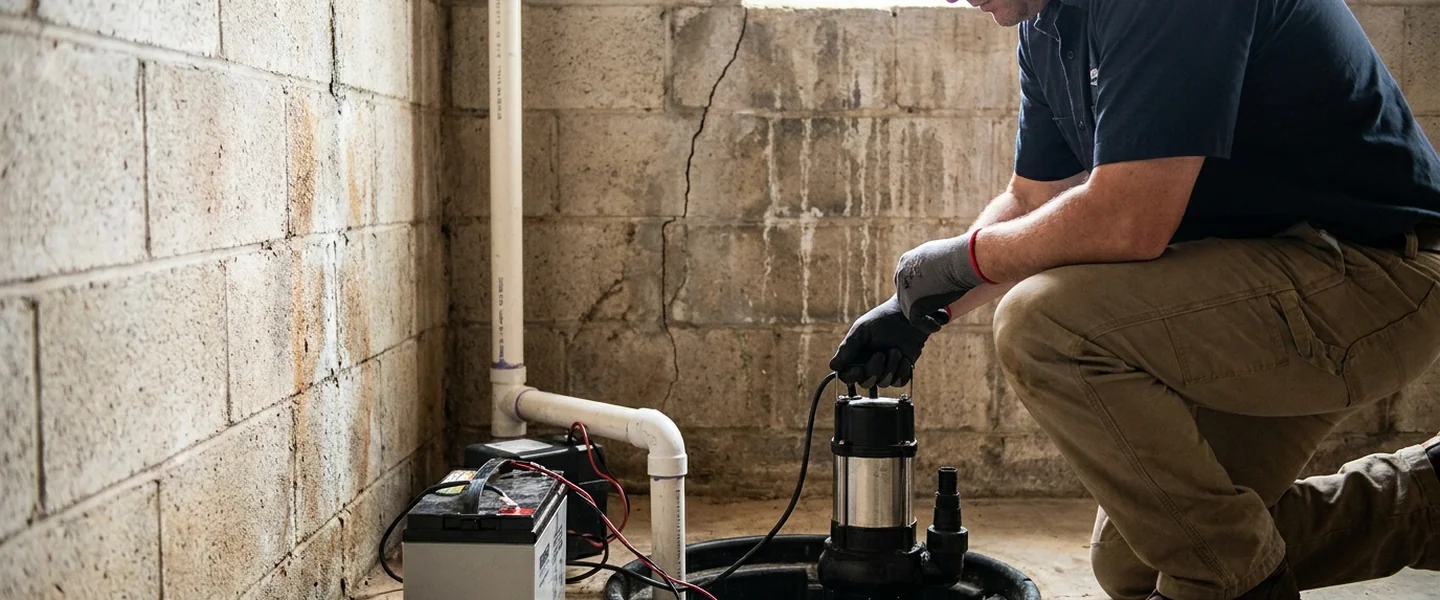
Sump Pump Installation in Arlington, TX
Primary and battery-backup sump pump systems for North Texas basements — protecting your home when storms hit and power goes out.
Call Now: (817) 904-3805Sump pump installation in Arlington, TX is a practical necessity for any home with a basement and a history of water intrusion — and given North Texas's combination of expansive clay soil and intense spring storm events, that includes a large portion of the area's basement homes. Arlington TX Foundation Pros installs pedestal and submersible sump pumps with battery-backup secondary systems, discharging to daylight away from the foundation perimeter. Call (817) 904-3805 for a free assessment and written estimate.
Why Battery Backup Matters in Tarrant County
The heavy rainfall events that push water into Arlington basements — the 3–5 inch spring storms and the post-drought recharge events — are precisely the events that also knock out power across the DFW grid. A primary sump pump that goes down during a power outage stops protecting the basement at exactly the moment protection is most needed. Battery backup pumps operate independently of grid power, typically for 8–12 hours on a full charge at normal pump cycles. We install battery backup as standard on every new sump pump installation because the cost of a battery backup system is a small fraction of the cost of one basement flood event.
Project Details
| Service | Sump Pump Installation (primary + battery backup) |
|---|---|
| Timeline | One day for most installations into an existing pit |
| Primary Pump Type | Submersible (standard) or pedestal — selected for pit size and volume |
| Backup System | Battery-powered backup pump, 8–12 hour operation on full charge |
| Discharge | Exterior discharge line to daylight, minimum 6 feet from foundation |
| Pump Service Life | 7–10 years typical; we service and replace as a maintenance call |
| Pricing | Quoted per job after free on-site inspection — every quote is itemized in writing |
Our Sump Pump Installation Process
- 1Free assessment. We evaluate the existing sump pit (size, depth, liner condition), the discharge line routing, and whether the pit is properly positioned to receive water from the drainage system. We identify any issues with the existing setup before recommending a replacement or new system.
- 2Written quote. Primary pump model, backup system specifications, discharge line routing, and any pit repair needed are itemized before work begins.
- 3Pump installation. Submersible pump is set in the pit, connected to the discharge line, and float switch set at the appropriate activation level. Check valve installed on the discharge line to prevent back-flow.
- 4Battery backup installation. Battery backup pump is set above the primary pump float level, connected to a dedicated battery system, and tested independently.
- 5Discharge line verification. We verify the discharge line terminates at daylight, slopes away from the foundation, and does not drain toward the house or a neighbor's property.
- 6System test and walkthrough. We test both primary and backup operation before leaving and walk through maintenance — how to test the backup annually, battery replacement schedule, and signs of pump wear to watch for.
Common Sump Pump Scenarios in Arlington Homes
Failed Existing Pump
Pumps typically fail at 7–10 years. If the pit is functional and properly positioned, a replacement installation is typically a one-day job. We replace with an equal or upgraded system.
New Interior Drainage System
If we're installing an interior French drain as part of a waterproofing project, the sump pump is installed as part of that scope — the pit is excavated, pump installed, and discharge line run as part of the same job.
Backup-Only Addition
Homeowners with an existing primary pump but no backup can add a battery backup system to an existing pit without replacing the primary. This is the most cost-effective upgrade for homes with a functional primary in a high-outage-risk area.
No Existing Pit
For basements without an existing sump pit, we excavate the pit, install a pit liner, and complete the full installation. Pit excavation is typically done as part of an interior drainage project.
After Installation — Maintenance and Replacement
We recommend testing the battery backup pump annually by pouring water into the pit until the backup activates — confirm it moves water and the battery alarm is not sounding. Battery replacement on typical backup systems is every 3–5 years depending on the battery chemistry. We provide a written maintenance checklist at installation. Primary pump replacement is typically needed at 7–10 years; we service and replace as a separate maintenance call — call us when the pump is running more frequently than usual or making unusual noise, which are the early warning signs before failure.
Sump Pump FAQs — Arlington, TX
How often should my sump pump run?
During and after heavy rain, cycling every few minutes is normal. Between rain events, it may not run at all for weeks. If your pump is running continuously or very frequently during dry weather, it may indicate a groundwater issue, a plumbing leak contributing water to the pit, or a failed float switch.
What size pump do I need?
Pump sizing depends on the volume of water the pit needs to handle and the vertical lift of the discharge line. We assess this at the inspection and specify the appropriate pump capacity in the written quote — not a generic residential model.
How long does battery backup last during an outage?
Most backup systems run 8–12 hours at normal pump cycle frequency on a full charge. During a major storm event where the pump is cycling very frequently, runtime may be shorter. We recommend a backup system with a battery monitor that alerts you when battery charge is low.
Can I install a sump pump myself?
The mechanical installation is straightforward; the electrical connection to a dedicated GFCI-protected circuit is where most DIY installs fail inspection. In Arlington, sump pump discharge routing also needs to comply with local drainage ordinances. We handle the full installation including discharge line routing that meets code.
My pump is running but water is still rising — what's wrong?
Either the pump capacity is insufficient for the inflow rate, the discharge line is blocked or too long creating back-pressure, the float switch is set too high, or the pump itself is failing. Call (817) 904-3805 — this is an active water emergency and we'll respond quickly.
Choosing the Right Pump for Your Application
Not all sump pumps are the same, and the cheapest unit at the hardware store is rarely the right choice for a Tarrant County basement. Pump selection depends on the volume of water the pit needs to handle at peak flow — measured in gallons per hour — and the total head pressure, which is the vertical distance the pump must lift water to reach the discharge line outlet plus any friction losses in the pipe. An undersized pump will run continuously during a heavy rain event without keeping up with inflow, burning out the motor prematurely. An oversized pump short-cycles (runs for very brief periods) which also reduces pump life. We size the pump based on the actual inflow your drainage system generates and the discharge line's head pressure — that calculation goes in the written quote.
Submersible pumps (installed inside the pit) are quieter and more efficient for most residential applications. Pedestal pumps (motor above the pit on a pedestal) are more accessible for servicing but louder and less suited to high-volume pits. We select the appropriate type at the inspection based on pit dimensions and expected flow.
Common Misconceptions About Sump Pumps
"A sump pump is all I need to keep my basement dry."
A sump pump moves water out of the pit — it doesn't intercept water entering the basement. Without a drainage system that collects water at the floor-wall joint and directs it to the pit, the pump has nothing to manage. Sump pumps are the discharge component of a waterproofing system, not the complete solution on their own. A pump installed in a pit that receives no drainage input sits idle while the basement floods around it.
"My pump is running fine, so I don't need a battery backup."
Primary pump failure statistics are irrelevant during a power outage — a functioning primary pump that has no power does exactly nothing. The DFW area loses grid power during precisely the storm events that push the most water against basement walls. Battery backup is insurance against the intersection of two simultaneous events: a heavy storm and a power outage. That intersection happens regularly in Tarrant County every spring.
"I can just run the discharge line to the yard and it'll be fine."
Discharge lines that terminate too close to the house, drain toward the foundation, or discharge into yard areas that slope back toward the perimeter re-introduce water to the soil adjacent to the foundation — partially defeating the waterproofing system. Discharge must terminate at a point that drains away from the house, with the outlet above grade and protected from freezing. We verify discharge routing at every installation.
Arlington-Specific Sump Pump Considerations
The spring storm season in North Texas — March through May — is when Tarrant County sump pumps run hardest. The same storms that knock out power (ice storms in February, severe thunderstorms in April and May) are the storms that generate the most inflow. If you don't have battery backup going into spring, you are unprotected during the highest-risk period of the year. We install and replace pumps year-round, but our busiest period is fall and early winter — homeowners who had a spring water event and want to be prepared before the next one. We typically have shorter lead times in summer and fall than in spring.
Homeowners in the older Arlington subdivisions (pre-1980 housing stock in areas like the Fielder Road corridor, South Davis Drive neighborhoods, and the areas around Vandergriff Park) often have original cast-iron pit liners that have cracked or deteriorated. If your existing pit is compromised, installing a new pump into it doesn't solve the liner problem — we assess pit condition at the inspection and include liner replacement in the quote if needed.
Sump Pump Installation in Arlington, TX
Primary and battery backup systems, written estimate, same-week installation across Tarrant County.
Call (817) 904-3805Related reading: Basement Waterproofing | Egress Window Installation
What You Get in Our Quote vs. the Lowball Bid
We don't compete on the lowest sticker price — we compete on the quote that gets the job actually done. Here is what is included in every quote we write, and the cut-corners that show up in cheaper bids.
Included in our written quote
- Engineer-style elevation + crack assessment
- Soil and drainage evaluation
- Written quote with pier counts + warranty terms
- Photo documentation of every crack/movement
- Permit-pulling where required
- Post-install elevation re-check
Cut corners in the lowball bid
- Free-quote with no actual inspection
- Pier-count guesses without measurements
- Subcontracted installation crews
- Warranties that exclude common failure modes
- Pressure to sign at the kitchen table
- Same-day pricing tricks