House Leveling & Piering in Arlington, TX
Steel push piers and helical piers driven to load-bearing strata — permanent foundation stabilization for Tarrant County homes.
Call Now: (817) 904-3805House leveling and pier installation is the permanent solution for Arlington homes that have settled due to Blackland Prairie clay movement. When shallow slab foundations lose soil support — through drought-driven shrinkage, water-driven erosion, or decades of seasonal soil cycling — the structure above settles unevenly. Push piers and helical piers drive past the unstable surface clay to competent load-bearing strata, transferring the home's weight to stable ground and allowing the foundation to be lifted back toward its original elevation. Arlington TX Foundation Pros installs steel push piers and helical piers for residential foundation stabilization across Tarrant County. Call (817) 904-3805 for a free engineering inspection.
Foundation Settlement in North Texas — Why Piering Works
Arlington's Blackland Prairie clay shrinks dramatically during the long Texas summer droughts. When the soil beneath a slab-on-grade foundation loses moisture, it contracts — sometimes pulling away from the concrete entirely — and the slab drops into the void. The weight of the home is then unevenly distributed: portions of the slab that retain soil contact bear more load, while areas over voids carry less. The result is differential settlement — the foundation isn't sinking uniformly but tilting, twisting, and cracking as different sections move independently.
Push piers address this by driving steel pipe sections through the unstable surface clay to load-bearing bedrock or dense soil below the active moisture zone. In the DFW area, the active zone (the depth to which seasonal moisture variation affects the soil) typically extends 8–15 feet. Below that, the soil is stable regardless of surface conditions. Once piers reach that stable layer, a bracket system transfers the structure's load from the failed surface clay to the piers — and a hydraulic jack system allows the foundation to be lifted incrementally toward its original elevation.
Helical piers work on the same principle but use a screw-anchor design that is installed by rotation rather than driving. They are better suited for lighter loads, sites with limited access (interior rooms, tight perimeter clearance), or situations where the installation vibration of push pier driving would risk damage to the structure.
Project Details
| Service | Steel Push Pier and Helical Pier Foundation Stabilization |
|---|---|
| Timeline | 1–3 days depending on pier count and access conditions |
| Pier Types | Steel push piers (driven), helical piers (screwed) — selection based on load and access |
| Depth | Below the active moisture zone — typically 15–30 feet in Tarrant County |
| Lifting | Hydraulic simultaneous lift system — foundation raised incrementally to minimize structure stress |
| Excavation | 18–24 inch access pits at each pier location; restored after installation |
| Warranty | Lifetime warranty on push and helical pier systems (manufacturer + workmanship); fully transferable |
| Pricing | Quoted per job after free on-site inspection — every quote is itemized in writing |
Our House Leveling Process
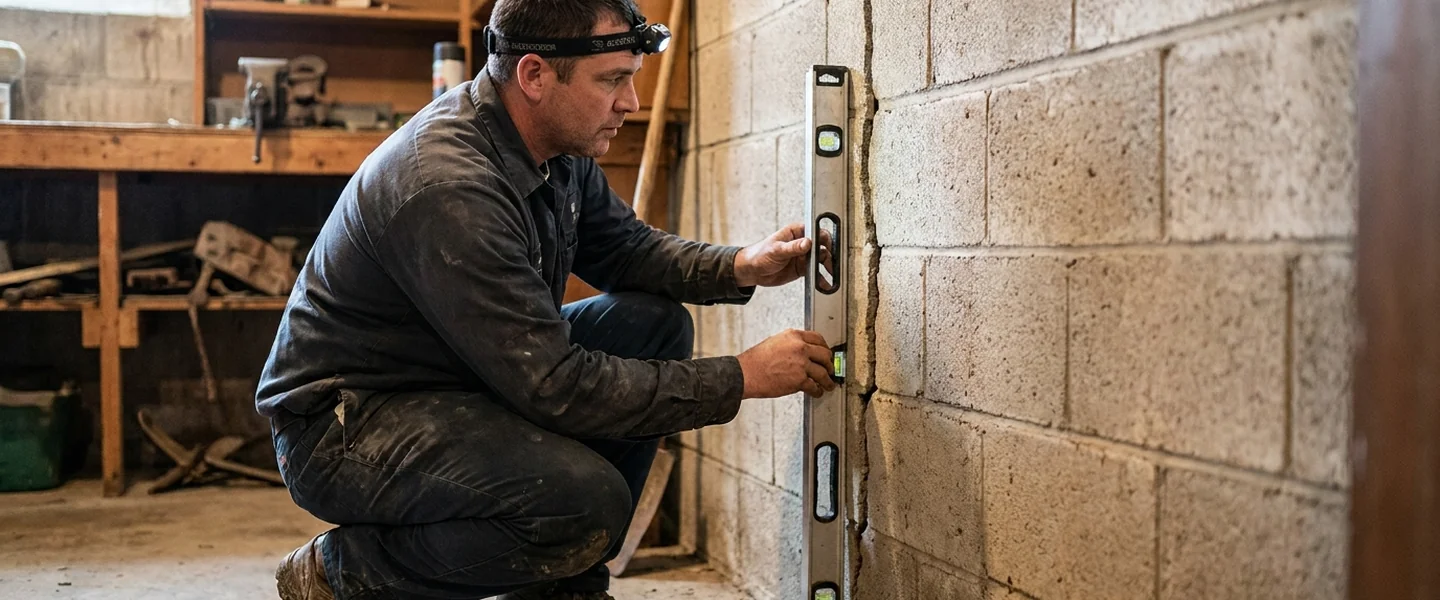
- 1Free engineering inspection. We assess the settlement pattern, measure floor elevation differentials, check crack patterns and door/window operation, and identify which portions of the foundation have lost support. We recommend pier count and type based on what we find, not a standard package.
- 2Written itemized quote. Pier count, type, warranty terms, and drainage recommendations are all in writing before work begins. We don't start until you've approved the quote.
- 3Excavation and bracket installation. Access pits are dug at each pier location, typically 18–24 inches wide, to expose the footing. A bracket is secured to the underside of the footing — this is the load transfer point.
- 4Pier installation. Push pier sections are driven through the bracket and into the soil using a hydraulic ram, adding sections until refusal (the point at which the pier reaches competent soil and resists further advancement). Helical piers are rotated into position with a hydraulic torque drive.
- 5Simultaneous lift. Once all piers are installed, hydraulic jacks are placed at each pier and raised simultaneously to lift the foundation incrementally. Simultaneous lifting minimizes differential stress on the structure during the raise.
- 6Restoration and documentation. Excavation areas are backfilled and graded. We provide a written completion report with pier locations, depths, final elevation readings, and warranty documentation for your records and any future real estate transaction.
Push Piers vs. Helical Piers — Which Does Your Home Need?
Steel Push Piers
Best for: heavy loads (two-story homes, areas with brick veneer, significant dead load), exterior foundation access, sites where the structure's own weight is available to drive the pier. Driven by hydraulic ram — faster installation per pier than helical on most DFW sites.
Helical Piers
Best for: lighter loads, new construction, interior applications (no exterior access), sites where vibration from push pier driving is a concern, and porch/stair foundations that don't have enough dead load to drive push piers to refusal.
Common Scenarios We See in Arlington and Tarrant County
Drought Settlement (1960s–80s Slabs)
Homes built during the post-war suburban expansion of Arlington on shallow slab foundations. After 40–60 years of soil cycling, areas of the slab over void-prone clay have settled 1–4 inches. Doors stick, floors are noticeably uneven, cracks follow the differential settlement pattern.
Tree Root Desiccation
Large trees near the foundation — oaks, elms, pecans common in older Arlington neighborhoods — extract moisture from soil directly below the slab. The resulting localized drying creates settlement voids directly under the tree's drip line, often on one corner of the home.
Plumbing Leak Settlement
Slab plumbing leaks (post-tension slabs, older cast-iron lines) erode the soil below the slab over years before the leak is detected. By the time the leak is found and repaired, the settlement is already established. Piering after plumbing repair stabilizes the foundation at its current elevation.
New Development Loading
Additions, outbuildings, and heavy landscaping features (concrete patios, retaining walls) added to older homes can increase loading beyond the original slab design. Piering under the addition's footprint provides the additional support the original design didn't include.
Warranty in Detail
We offer a lifetime warranty on all push pier and helical pier installations — this is the manufacturer warranty on the pier system hardware combined with our workmanship warranty on the installation. What the lifetime warranty covers: the pier system maintaining its load capacity and the foundation elevation not declining below the post-installation measurement. What the warranty does not cover: new settlement in unpiered portions of the foundation, cosmetic damage that was present before or occurs during the lift (existing cracks may widen slightly during the lift process as the foundation moves back toward original position — this is normal and expected), or damage caused by events outside our scope such as plumbing leaks or flooding that post-date the installation.
The warranty is fully transferable to subsequent owners. We provide a written warranty certificate, a pier location diagram, and the installation report — everything a future buyer's home inspector or real estate attorney needs. In the Arlington resale market, a piered and warranted foundation with documentation is a significant asset that distinguishes your home from comparable properties with undocumented or unaddressed foundation issues.
After the Pier Installation
The foundation is immediately stabilized at its post-lift elevation. In the 30 days following installation, some hairline cracks from the lift may appear in plaster, tile grout, or drywall — this is normal as the structure adjusts to its new position. We document the pre-installation crack inventory so any new cracking can be attributed accurately. At 6 months, we perform a complimentary level recheck to confirm the foundation is holding its post-installation position. At 12 months, a second recheck is included in the warranty service. After that, recheks are available on request. If the foundation has moved more than the expected tolerance, we investigate the cause and address it under warranty.
House Leveling & Piering FAQs — Arlington, TX
How many piers does my home need?
Pier count depends on the settlement pattern, the load being transferred, and the distance between settled and stable sections of the foundation. A small corner settlement may require 3–4 piers. A home that has settled along one full side may require 10–15. We assess this at the inspection and provide the count in the written quote.
Will the house be level after piering?
We lift to the practical maximum — the point at which continued lifting would risk cracking or displacing plumbing, electrical, or structural elements that have adjusted to the settled position over years. In most cases this is within 1/2 inch of the original elevation. We set realistic expectations in the written estimate, not promises of a perfectly level floor.
How deep do the piers go?
In Tarrant County, piers typically reach 15–30 feet — below the active moisture zone where the Blackland Prairie clay continues to shrink and swell seasonally. The pier is driven until it reaches refusal (the soil resists further advancement), which is how we confirm it's in competent load-bearing material.
Do you need to be inside the house during the lift?
One crew member monitors interior conditions during the lift — watching for cracking, checking door and window operation, and measuring floor elevation as the lift proceeds. We typically ask that the home be accessible but not occupied by the owners during active lifting (a few hours per day).
Will pier installation disrupt my landscaping?
Access pits at each pier location are 18–24 inches wide. We flag irrigation lines before excavation and restore the pits with compacted backfill after installation. Some landscaping near the perimeter — plants, mulch, pavers — may need to be temporarily moved. We document the work area before starting and restore it as close to original condition as practical.
Is the pier warranty really transferable?
Yes — we provide a written warranty certificate that can be transferred to a new owner with a call to our office. There's no transfer fee. The warranty follows the structure, not the original homeowner. This is a standard part of our pier installation package and we provide the documentation needed for real estate closings.
What does house leveling cost in Arlington, TX?
Call (817) 904-3805 for a free written estimate. Cost depends on pier count, pier type, and access conditions. We don't quote on the phone because the pier count — the primary cost driver — can only be determined by an on-site inspection of the settlement pattern.
Can piering fix all foundation problems?
Piering addresses settlement — foundation sections that have dropped due to soil movement beneath them. It does not address bowing or leaning walls (which need carbon fiber straps or wall anchors), horizontal cracking from lateral soil pressure, or drainage issues that are actively driving ongoing settlement. We diagnose the full picture at the inspection and recommend the appropriate combination of solutions.
Related Services
Free House Leveling Inspection in Arlington, TX
Written estimate, lifetime transferable warranty, locally owned crew. Same-week appointments across Tarrant County.
Call (817) 904-3805Related reading: Push Piers vs Helical Piers: Which Is Right for North Texas Soil? | Why Arlington, TX Houses Settle (and What's Actually Fixable)
What You Get in Our Quote vs. the Lowball Bid
We don't compete on the lowest sticker price — we compete on the quote that gets the job actually done. Here is what is included in every quote we write, and the cut-corners that show up in cheaper bids.
Included in our written quote
- Engineer-style elevation + crack assessment
- Soil and drainage evaluation
- Written quote with pier counts + warranty terms
- Photo documentation of every crack/movement
- Permit-pulling where required
- Post-install elevation re-check
Cut corners in the lowball bid
- Free-quote with no actual inspection
- Pier-count guesses without measurements
- Subcontracted installation crews
- Warranties that exclude common failure modes
- Pressure to sign at the kitchen table
- Same-day pricing tricks